
A Life Saved in Minutes – Bob’s Stroke Story

Bob and Joy were having an ordinary morning, getting ready for a grocery run, when everything changed. Joy called out, “Okay, come on,” and watched Bob rise from his computer. “He stood up and spoke some words I couldn’t understand,” she recalls. When he tried again, the words were still garbled. Joy recognized the signs of a stroke and immediately called their daughter, Susan, instructing her to dial 911 and clearly request a code stroke.
Their eldest daughter, Lisa, later reflected, “If my mom hadn’t recognized the signs of a stroke and understood the urgency of calling a code stroke, the trajectory of my dad’s life could have been completely different.”
Rapid Response

The ambulance arrived quickly and brought Bob to Memorial Hospital Gulfport’s Emergency Department. He had slurred speech and significant weakness on his left side. Imaging revealed a blockage in the artery supplying the right side of his brain. He received clot busting medication, and neurointerventional radiologist Dr. David Thomasson recommended a mechanical thrombectomy to remove the clot.
The procedure took just 12 minutes and resulted in complete reperfusion, or restoration of blood flow. Dr. Thomasson explains, “Bob presented to the hospital quickly, had excellent pre stroke function, and imaging showed a small core infarct (a localized area of tissue death) with a large area of salvageable tissue. Patients receiving thrombectomy for large vessel occlusion have a significantly higher chance of regaining functional independence.”
Thrombectomy is a minimally invasive procedure typically performed under general anesthesia. It is done through a small incision in the groin. The artery in the groin is accessed and, from there, a series of small catheters and wires is advanced up into the arteries of the brain to remove the clot either with suction or with a device to pull the clot out.
He emphasizes the urgency: “Time is brain. Nearly two million brain cells die per minute during an acute stroke.”
Do you know the signs of stroke?
Remember to BE FAST
Balance – Sudden loss
Eyes – Sudden loss of vision
Face drooping
Arm weakness
Speech difficulty
Time to call 911
An Unexpected Recovery
In the ICU, Bob surprised everyone. He answered every cognitive question correctly…his name, the date, even the current president. His speech was clear, his weakness resolved, and he was cracking jokes. “Somebody was watching over me, and we know who it was,” he said.
Lisa felt the same. “While the procedure was happening, I said a prayer in the bathroom: ‘Lexi, if you can help your Bacha (grandfather) at all, I want you to do it.’” Her daughter Lexi, who passed away at 29, remains a powerful presence in their lives. On feeling Lexi’s presence during this concerning time, Lisa adds, “Knowing that when we lose someone we love, they are not really gone, but they’re often nearby and looking out for us. It is a wonderful example of how we are all connected and that love is the most powerful force which withstands time and space.”
Family Strength
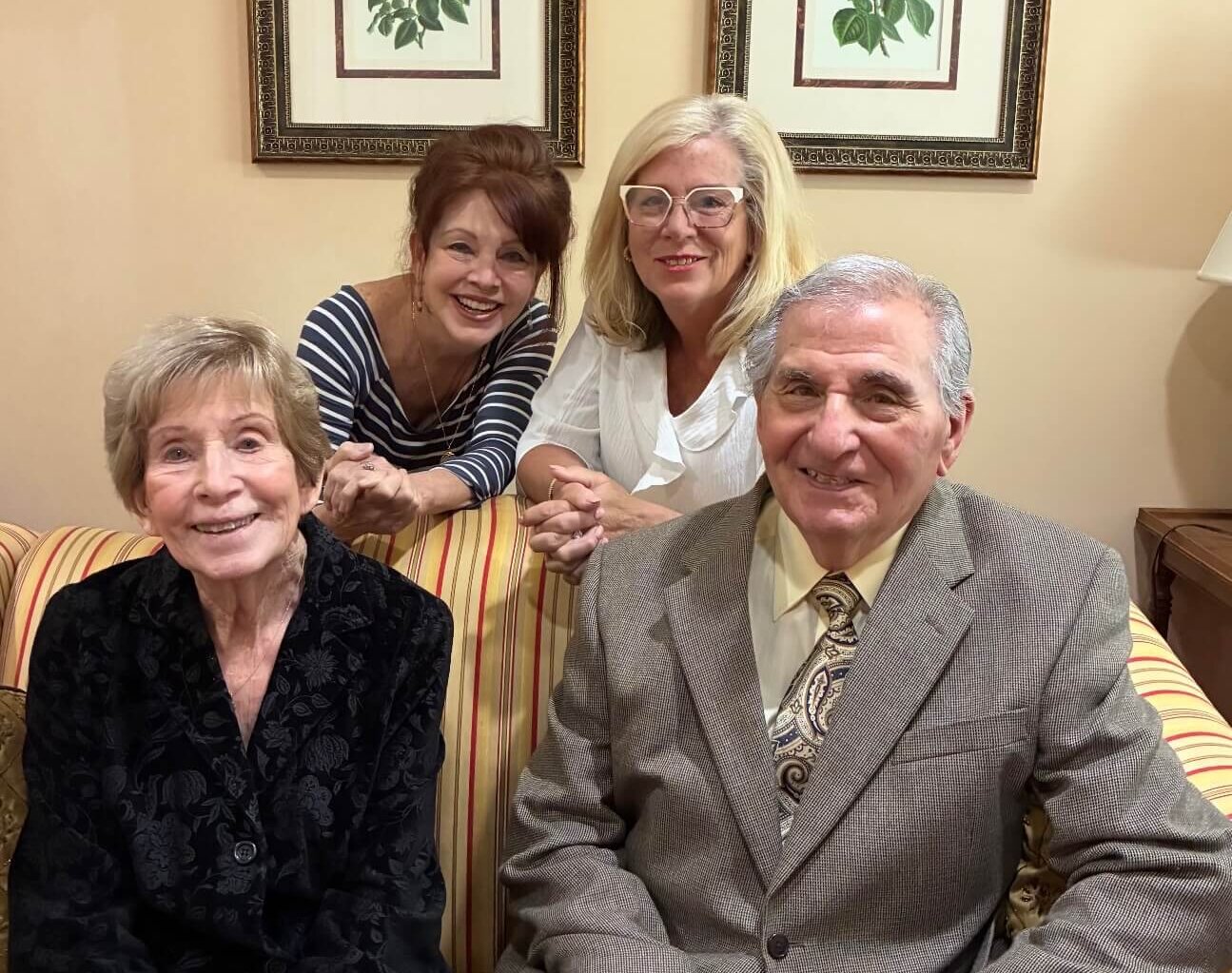
“Everything happened so quickly and the team was so competent we didn’t have time to be afraid,” Lisa says. “Mom says she just knew Dad was going to be okay right from the start, and dad says that our mom’s love and caring for him made the difference.” It wasn’t until the next day that they learned how severe the stroke had been.
Bob’s excellent baseline health played a major role. “He has exercised daily since he was a young teen and continues to exercise every night before bed, even now at 93,” Susan shares. He has always eaten well and maintained what she calls “the mental attitude that causes him to face a challenge and overcome it.”
The family also credits having nurses within the family who could help navigate the complexities of hospital care. “Even in the best healthcare organizations, gaps in communication exist,” Susan explains. “Dad was fortunate to have several advocates who understood the system.”
Healing and a Return to Joy
After returning home, Bob experienced a period of post stroke depression, a common physiological response. Lisa shares, “He was such a strong person who always did for everyone else before the stroke. It was hard for him to accept that he needed to allow others to care for him. Even with the best scenario from his stroke incident, there were still many difficulties along the way. It takes a village to recognize, understand and help the stroke patient be all they can be after the incident.”
With time, support, and determination, he regained his independence. “We’re almost one year out now and really feeling good about his outlook on life and the future,” Susan says.
Today, Bob is back to enjoying the life he loves: walks with Joy, family meals, card games, old movies, drives along the beach, and visits to the small coastal towns they adore. At 93, with a life full of adventure, from the Navy to General Motors, from national stages to woodworking, he remains strong, grateful, and deeply loved.
As a reminder, Dr. Thomasson shares, “If there is any concern for stroke, call 911 immediately. Some large vessel occlusions (potential severe strokes) may initially present with minor symptoms. Don’t wait and see if it gets better. By calling 911 during a suspected stroke, EMS knows the preferred hospitals for stroke patients.”
Neurointerventional Radiological services at Memorial Hospital Gulfport are covered by Southern Neurointerventional Institute with Dr. Zachary Liner, Dr, David Thomasson, and Dr. Kendrick Johnson.
Memorial Hospital Gulfport is designated a Level I Stroke Center by the Mississippi State Department of Health, the highest tier of stroke care available in Mississippi.
Learn more about Memorial’s Stroke Program by clicking below.