
From Tragedy on Highway 49 to Steps Toward Hope
Before the accident, 25-year-old Jacob was the kind of person everyone wanted as a friend.
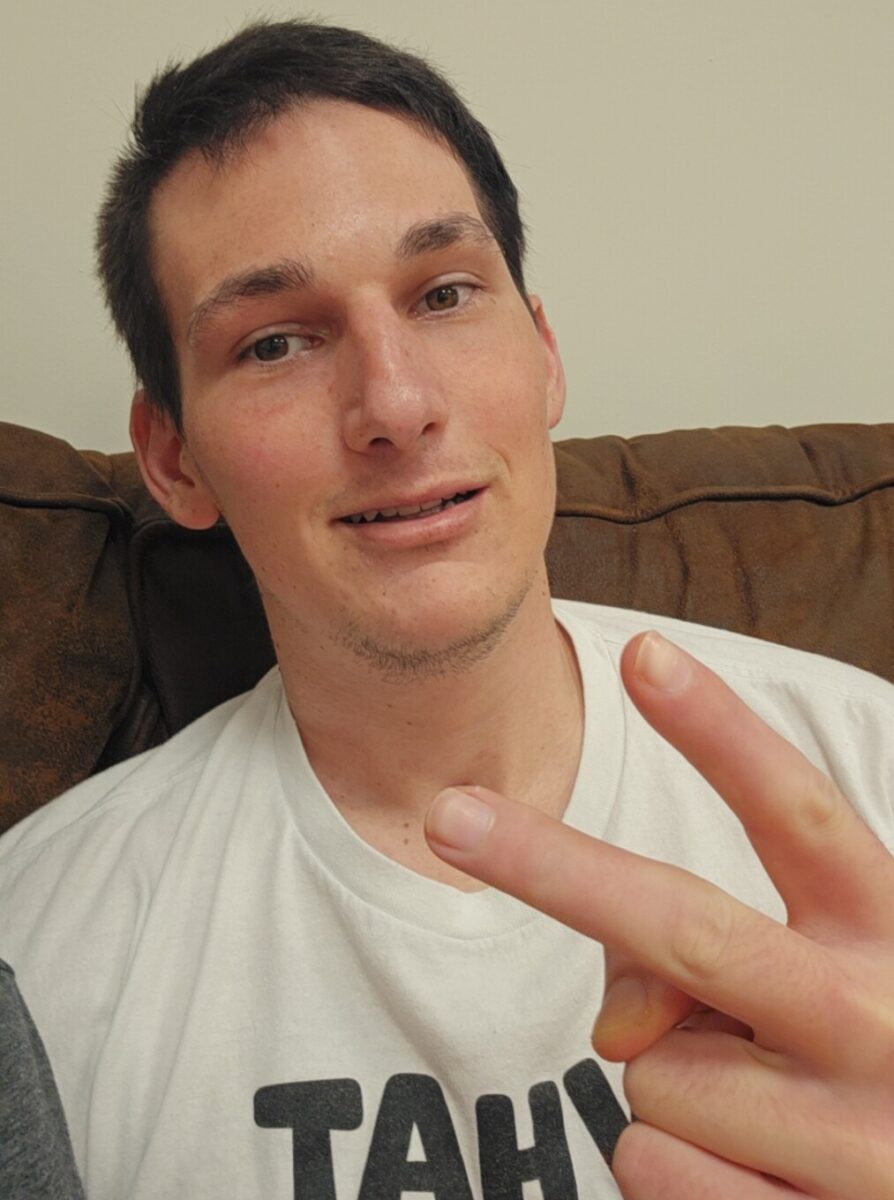
“He was an outdoors kid. We live in the country, and the kids were always outside. He was an Eagle Scout. That just kind of gives you an idea of the outdoorsy things he loved,” his mom, Sandra, recalls.
He has a big heart and an even bigger willingness to help. “If you were stuck on the side of the road, he would stop to check your tire or see what the problem was. He’s pulled many friends out when they were stuck. He’d come home, get the truck and trailer, and go get his friend who was broken down somewhere.”
Whether it was helping with projects around the house, protecting his sisters, or cooking the fish he caught, Jacob poured himself into the people and things he loved. “Fishing was probably his number one hobby…he’d catch redfish and flounder, come home and clean them, cook them, and then clean the kitchen. He even won a Junior Fishing Rodeo with a bass when he was around 12 or 13.”
One day, everything changed.
On Highway 49, Jacob’s car spun into oncoming traffic and was struck from behind. He wasn’t wearing a seat belt. “Life is too precious not to do the little things that could make a huge difference, like buckling up,” Sandra says. “His seat was intact. I can only imagine his injuries would have been much less severe if he was buckled up.”
The crash left him with a severe traumatic brain injury and two broken neck bones that nearly punctured his vertebral artery. “Had that happened, he would have been dead.”
He also broke the transverse process on T2-T7, which are bony projections that serve as attachment points for muscles and ligaments and connect with the ribs.
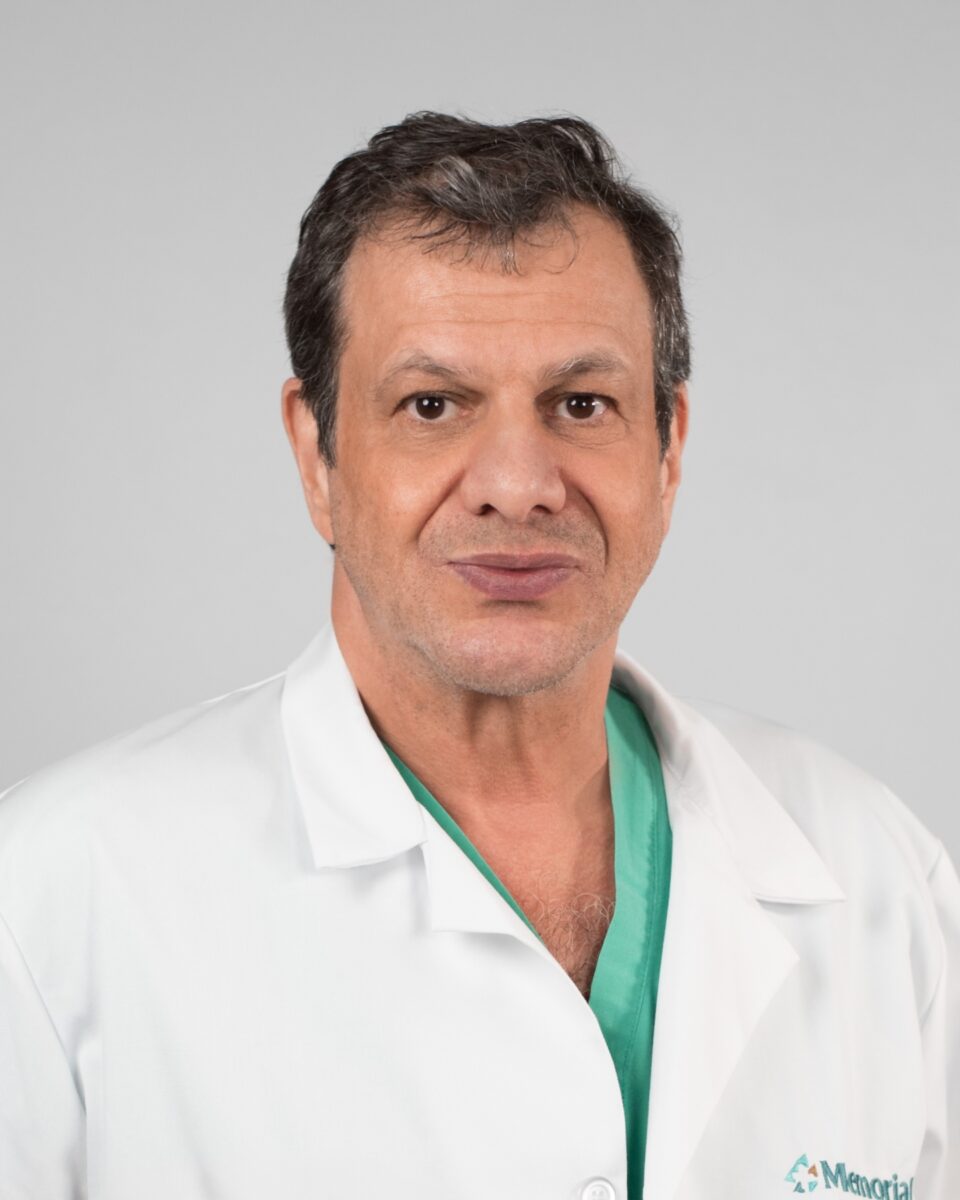
When Jacob was brought to Memorial’s Emergency Department in Gulfport, his Glasgow Coma Scale score was a 3 (indicating a deep coma), and everything was unresponsive. The Glasgow Coma Scale is a neurological assessment tool used to evaluate the level of consciousness after a brain injury. It assigns points to three categories of responses: eye opening, verbal response, and motor response.
Sandra reflects, “Dr. Orhan Ilercil was the neurosurgeon on call that night. And I feel like we hit the jackpot. He took the time to watch Jacob to see if there were any signs from him that somehow he could be saved, so when Jake postured (moved his arms in a certain way), Dr. Ilercil said that at least there was a chance and suggested a craniectomy.”
Once the surgery was done and Jacob was moved to the ICU, Sandra shares that Dr. Ilercil came by every single day. “Dr. Ilercil was a godsend. He told us the truth but never took away our hope. When Jacob first moved his thumb, he didn’t discount it. He said, ‘Families always see things first because you’re here all the time.’ He walked that fine line so well.”
A Long Road to Recovery
Jacob’s journey since then has been nothing short of grueling – and miraculous.
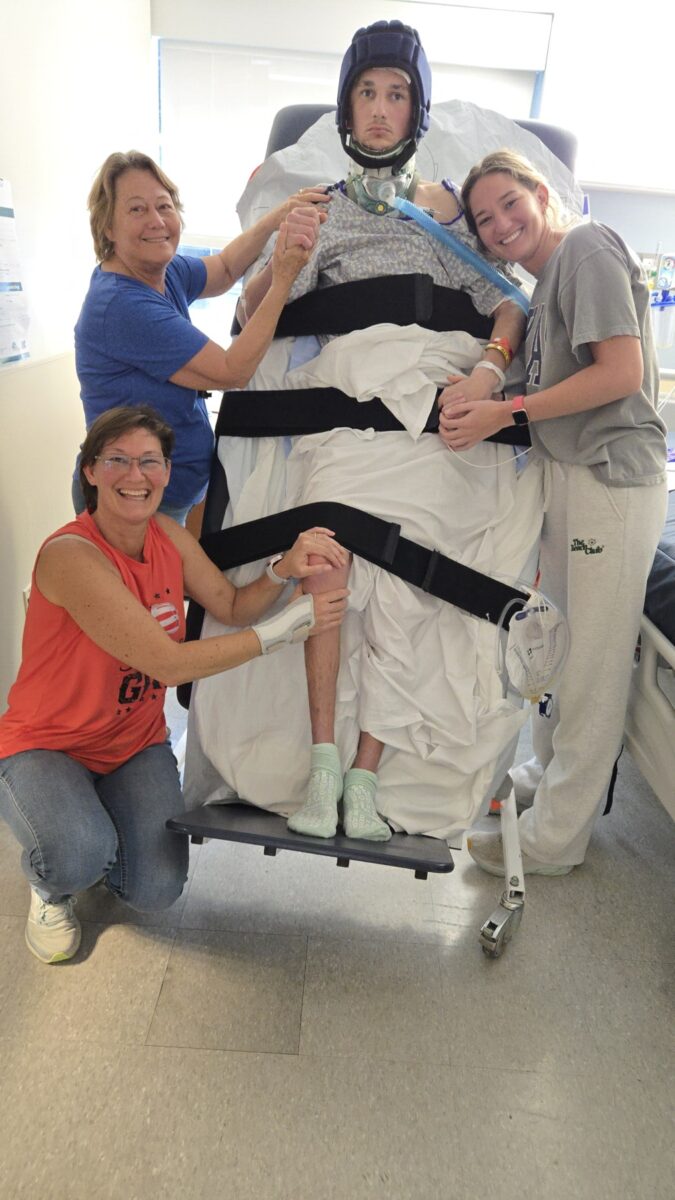
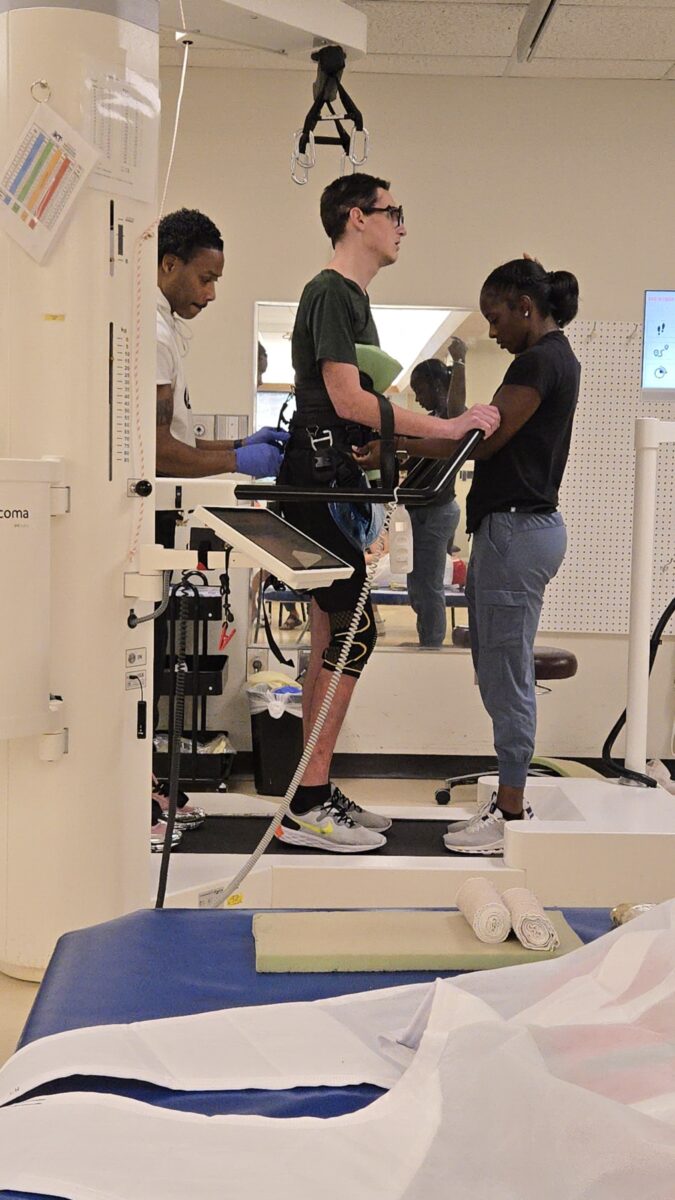
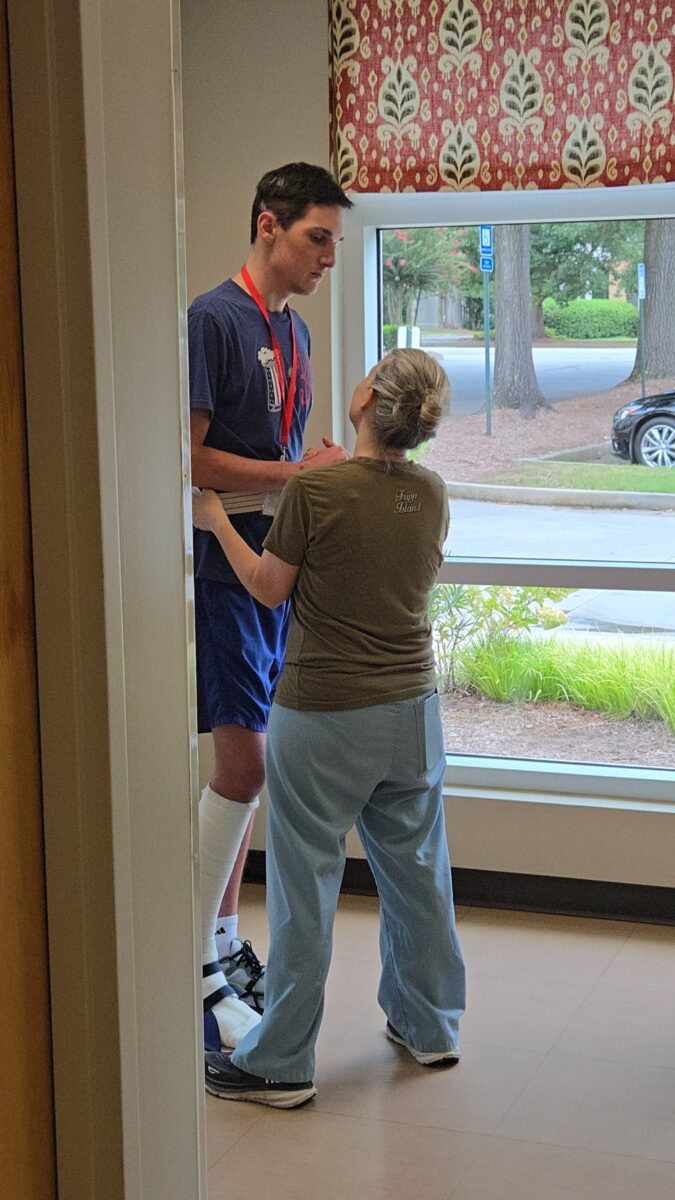
Photos documenting Jacob’s progress
“They removed a large part of his skull to allow his brain to swell and put in a shunt later for hydrocephalus (the buildup of fluid in cavities called ventricles deep within the brain). At Memorial, he spent three weeks in the ICU, one week in PCU, and five weeks at Select Specialty Hospital within Memorial before we moved to Atlanta to the inpatient program of the Shepherd Center. Jacob was an inpatient there from May 5 – July 24. He received neurological rehab there every weekday and a small amount on Saturdays. When we discharged there, which was the first time we were not officially in a hospital, he started their outpatient program for continued therapy at Shepherd Pathways.”
It took five weeks before doctors considered him “emerged” from his minimally conscious state. “He knew what things were and what to do with them, even if his hands couldn’t quite follow through.”
Step by step, Jacob started regaining pieces of himself: “Today, he’s able to talk, eat a full diet, and walk with a gait belt. We’ve gotten rid of the PEG tube, and even the walker. He uses a wheelchair only for long distances.”
Recently, the smallest victories have meant the most. “He has just started smiling spontaneously…even just the beginning of a laugh. A little bit of that personality is starting to shine through.”
Strength in Family, Care, and Faith
Sandra has been by Jacob’s side every step of the way. “It’s been long. It’s been scary. It’s been tearful. But some of the tears have been happy tears – happy that he’s progressing, talking, walking, eating, smiling, and laughing. As a mom, seeing that life come back into his eyes, that’s the biggest win.”
She’s deeply grateful for the medical teams who treated Jacob. “Memorial was fantastic. I still text with a few of the ICU nurses to keep them updated on how Jacob is doing,” she adds. “We feel so blessed to have been at your hospital for his care and were so happy that it was local. We would not have hesitated moving him if we felt he would have received better care elsewhere.”
On their experience at Memorial and Jacob’s care team, Sandra is emphatic. “Your compassion and care are truly amazing. You allowed us to be scared and grieve the situation while taking care of him. We saw how tired you were by the end of your shifts, especially after a few days in a row of working. But you still did your jobs with a smile and with care and we needed that.”
She still keeps Dr. Ilercil and his nurse, Jean, updated on Jacob’s progress, adding, “I do telehealth visits with him, and I e-mail videos and updates to him and Jean, and she writes back, ‘Oh my goodness, Sandra, thank you so much for these. You know, Doctor Ilercil and I are just amazed at how far he’s come.’”
Where Jacob Is Now
After five months in the hospital, Jacob is now living with his family while attending outpatient rehab. “He can dress himself, feed himself, read, and write. His left hand doesn’t always cooperate, so they’re working on that, along with his stability and walking.”
He still experiences post-traumatic amnesia, leaving the past year foggy. “In his mind, it’s March 2024. He knows he was in an accident, but I don’t think he comprehends exactly what that means. He’s living in the moment, like a toddler learning each skill. His goal right now is just to walk better.”
Even with challenges ahead, Sandra’s faith remains unshaken. “We have prayed for complete healing, and I believe that’s what we’re going to have. My God’s big enough to give me that.”
To learn more about Memorial’s Neurosciences services, click the button below.
Memorial Neurosciences Services is comprised of a multidisciplinary team of specialists in neurosurgery, neurology, orthopedics, pain management and physical medicine and rehabilitation.
Memorial offers the only board-certified neurosurgeons on the Mississippi Gulf Coast. Their specialty is the prevention, diagnosis, surgical treatment, and rehabilitation of disorders affecting the nervous system in the brain, spine, spinal cord, central and peripheral nervous system (parts of the nervous system outside the brain and spinal cord), and the cerebrovascular (the brain and its blood vessels) system. Our neurosurgeons specialize in minimally invasive techniques to treat disorders of the brain, spine, spinal cord and peripheral nerves.